Background
Who are the Assyrians?
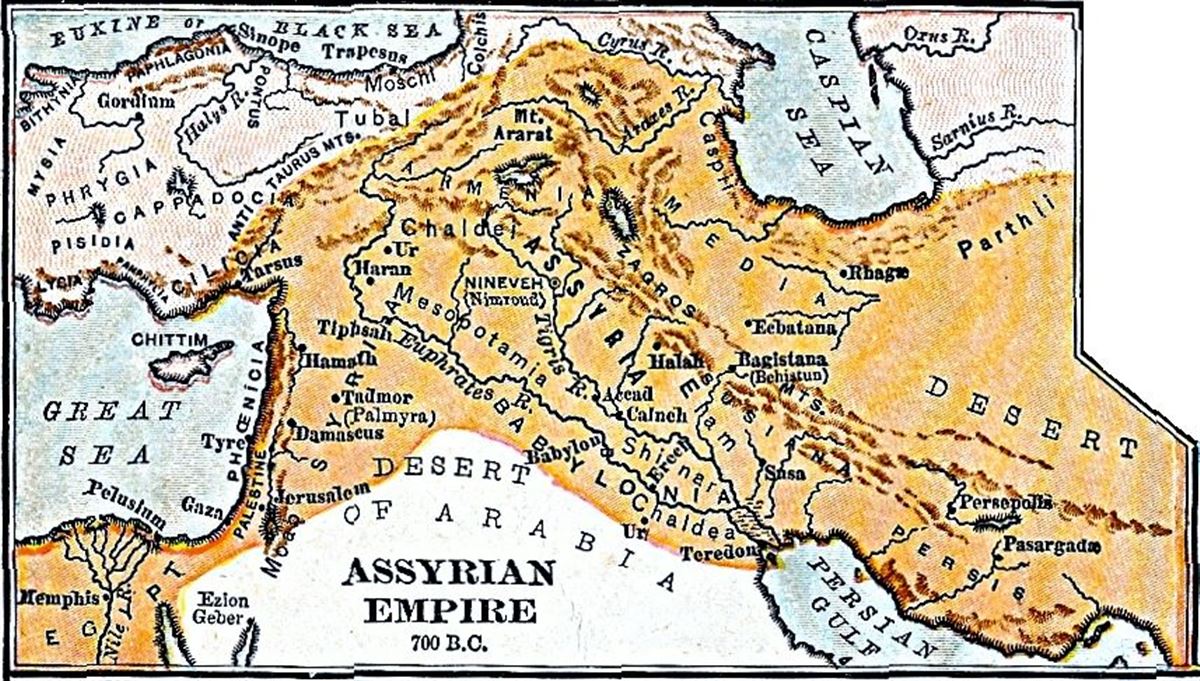
Assyrians, or Assyrian Christians, are an ethno-religious minority group. Often Assyrians are ignorantly mistaken to be the same as Syrians or Syriacs. However, the vital characteristic that define the identity of a Assyrian is their devotion to their religion, Christianity. Dated back to the second millennium B.C.E., Assyrians rose into a massive population starting with the establishment of the Assyrian Empire located near northern Mesopotamia. The empire that held many kings, such as Adad Nirari II as well as even queens, like the famous Sammu-Ramat, expanded to be so large that failure to maintain it was due. Thus, the caused the Assyrian empire to eventually collapsed later in the 600s B.C.E. The Assyrians were so successful with their expansion of territory due to their level of advancement with their warfare. (Wondering where chariots came from?) Interestingly enough, war/violence still remains a consistent issue for Assyrians.
The majority of Assyrians resided in what was then later known as the Ottoman Empire (which is now present day Turkey) where Assyrians soon experienced massive, devastating trauma. During World War I (1914-1924), more than 250,000 Assyrians were a victim of the Ottoman Empire’s ethnic cleansing. Also known as “The Year of the Sword”, it was because of the Assyrian Genocide that Assyrians simultaneously decreased and dispersed in numbers to other parts of the Middle East. The Assyrian Genocide impacted Assyrians’ population enormously, extensively so that Assyrians’ flee of their homeland for a more secure and safer living situation is defined as “The Assyrian Diaspora”. One relocation specifically being Northeast Syria. Their relocation in the Middle East further allows war/violence to follow them, as Turkey’s unsupervised militia in Syria is one of the regions Assyrians have fled to.
Connection to Turkey
Today Assyrians struggle trying to sustain their population, as they are currently known to be a minority group. Those that reside in the Middle East, specifically in Northeast Syria where the “safe zone” is technically known as the warfare zone between Turkey and Syria means that Assyrians are more susceptible to death than other ethnic groups. The war between Syria, ISIS, and Turkey have even destroyed a few of their main churches, where they are unable to practice their faith, which is a critical part of their identity. Turkey and Syria’s violent conflicts makes Assyrians to be one of the most vulnerable groups to be affected because reducing their population is a significant step forward to elimination for some small Assyrian groups in the Middle East, further supporting a masked genocide.


References
Albert, Gabrial. “Assyrians:’3,000 Years of History, yet the Internet is Our Only Home.’” Cultural Survival Quarterly Magazine, December 1997. https://www.culturalsurvival.org/publications/cultural-survival-quarterly/assyrians-3000-years-history-yet-internet-our-only-home
- Magazine gave a accurate account of the history and effect of “the Assyrian Dispora”.
Costa-Roberts, Daniel. “8 Things You Didn’t Know about Assyrian Christians.” PBS. Public Broadcasting Service, March 21, 2015. https://www.pbs.org/newshour/world/8-things-didnt-know-assyrian-christians.
- The article described the historic past of Assyrians in the aspect of warfare.
Deibert, Brannon. “Who Are the Assyrians? 10 Things to Know about Their History & Faith.” Christianity.com. Salem Web Network, December 3, 2018. https://www.christianity.com/church/denominations/discover-the-assyrians-10-things-to-know-about-their-history-faith.html.
- This article showed specific distinctions in regards to Assyrian’s religion and culture.
Enab Baladi. “Assyrians in Syria… An Ethnic Minority Group Resisting War.” Posted April 28, 2018. https://english.enabbaladi.net/archives/2018/04/assyrians-in-syria-an-ethnic-minority-group-resisting-war/#
- Enab Baladi is an organization that covers Syria political news and this blog post was able to supply specific information for the ethnicity aspect of Assyrians as well as reports of the destroyed churches.
 Watch Turkey